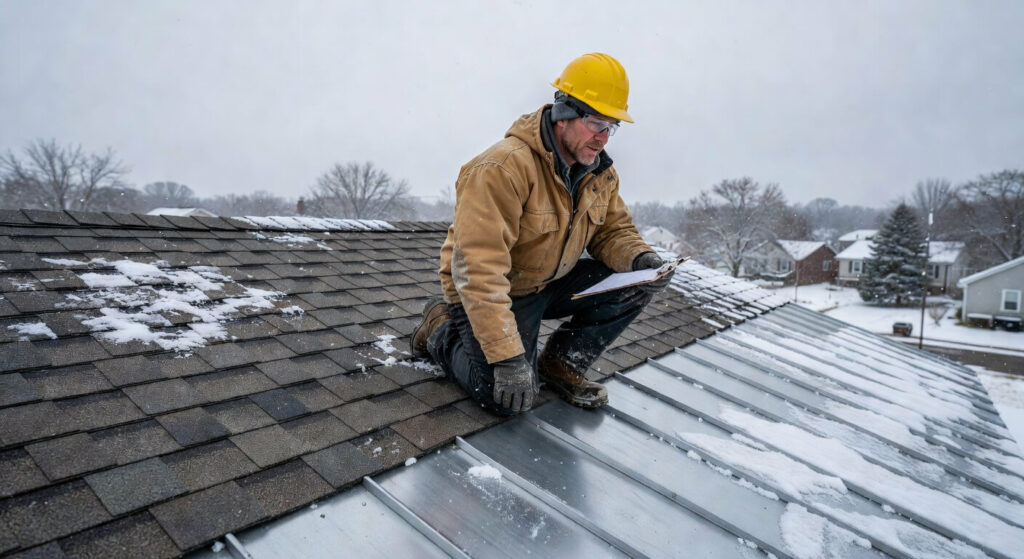
• Roofing material choice matters more in winter because cold weather, snow, and ice can expose weak spots fast.
• Asphalt shingles, metal, slate, wood, and synthetic options all work differently, so the best fit depends on budget, roof design, and weather needs.
• Smart planning now can help homeowners avoid leaks, extra repairs, and bigger problems later.
Why Roofing Choices Matter in Winter
When cold weather settles in Wabash, roof problems can show up faster than many homeowners expect. Snow, ice, and heavy wind can test older roofs and make weak spots easier to notice. That is why knowing the Types of roofing materials for homes matters before small issues turn into bigger ones.
The right roof can help your home handle winter stress more calmly and last longer through changing seasons. Some materials stand up better to freezing temperatures, while others need more care in harsh weather. If you want to plan ahead, we often suggest starting with a professional look at roofing inspection services before the damage spreads.
Choosing a roof is not just about looks or price. It is also about how the material performs when the weather gets rough and the temperature keeps dropping. A smart choice now can help you avoid leaks, drafts, and repair costs later.
What Homeowners Should Know First
Different roofing materials bring different strengths, and each one fits certain homes better than others. Asphalt shingles are common because they are simple to install and work well for many budgets, while metal roofing is often chosen for its long life and strong weather resistance. Slate, wood, and synthetic choices each have their own benefits, so the best option depends on your home’s style, structure, and weather needs.
Winter can also affect how a roof handles moisture, ice, and changing temperatures. Materials that shed snow well and resist cracking tend to do better when the season turns harsh. If your home already has older shingles or signs of wear, we may recommend checking whether a full roofing replacement makes more sense than repeated patch work.
Tips From The Pros
🛠️ Tip 1: Match the material to the weather
Some roofing materials handle freeze and thaw cycles better than others. In a winter climate, we look for options that resist cracking, lifting, and moisture damage.
📋 Tip 2: Think about your roof slope
Not every material works well on every roof pitch. Steeper roofs often handle certain shingles well, while lower slopes may need a material that moves water off faster.
🌨️ Tip 3: Watch for ice and snow buildup
Heavy snow can strain weak roofing areas and expose poor drainage. Materials that shed snow more easily can help reduce stress during winter storms.
🔎 Tip 4: Check the roof underlayment
The surface material matters, but so does the layer underneath it. A solid underlayment adds extra protection against water that sneaks past the outer roof.
💰 Tip 5: Balance cost with lifespan
A lower upfront price does not always mean the best long-term value. Some roofing materials cost more at first but last longer and need fewer repairs over time.
🏠 Tip 6: Keep your home’s style in mind
The roof should fit the house, not just protect it. The right material can improve curb appeal while still handling the local weather.
🧰 Tip 7: Ask about maintenance needs
Some roofing materials need more regular care than others. It helps to choose an option that fits the amount of upkeep you are willing to manage.
📆 Tip 8: Plan before the busy season
Roof work often goes more smoothly when it is scheduled early. Planning ahead gives you more time to compare Types of roofing materials for homes and choose the best fit for your home.
Frequently Asked Questions
What are the most common roofing materials for homes?
Yes, asphalt shingles are one of the most common choices for homes. Metal roofing, wood shakes, slate, and synthetic materials are also used depending on budget, style, and weather needs.
Which roofing material works best in winter?
Yes, materials that resist cracking and shed snow well are often the best for winter. Metal roofing and certain asphalt shingles can perform well when installed properly and matched to the home.
How do I choose between different roof materials?
Yes, the best choice depends on your home, your budget, and the local weather. The Types of roofing materials for homes should be compared by lifespan, maintenance needs, and how well they handle winter conditions.
Do all roofing materials last the same amount of time?
No, roofing materials do not all last the same amount of time. Some options are made for shorter service lives, while others can last much longer with proper care and installation.
Should I replace my roof if it is leaking in winter?
Yes, a leaking roof should be checked quickly, especially in winter. Small leaks can spread fast when snow and ice are involved, and waiting can lead to bigger damage inside the home.
Final Thoughts on Choosing the Right Roof
The best roof choice starts with knowing how each material performs in real weather, not just how it looks on paper. In Wabash, winter conditions make it even more important to choose something strong, practical, and suited to your home. When you understand the Types of roofing materials for homes, you can make a smarter choice that supports your house for years.
We believe a roof should give you peace of mind through every season. That means looking at durability, upkeep, and how well the material fits your home before making a final decision. To keep up with our work and see what we are up to, follow us on social media.