• A storm can leave hidden roof damage behind, so quick action, clear photos, and early contact with your insurer can make the claim process smoother and stronger.
• A simple checklist helps homeowners stay organized by tracking damage, saving records, and avoiding common mistakes that can slow down repairs or reduce claim support.
• Local roofing help and steady follow-up give you a better chance of handling the claim with confidence while protecting your home from more damage.
What to Do Right After Storm Damage
The goal after a storm is to protect your home and start the insurance claim process fast so small issues do not turn into bigger repairs. These storm damage roof insurance claim tips can help you stay calm and take the right steps from the start.
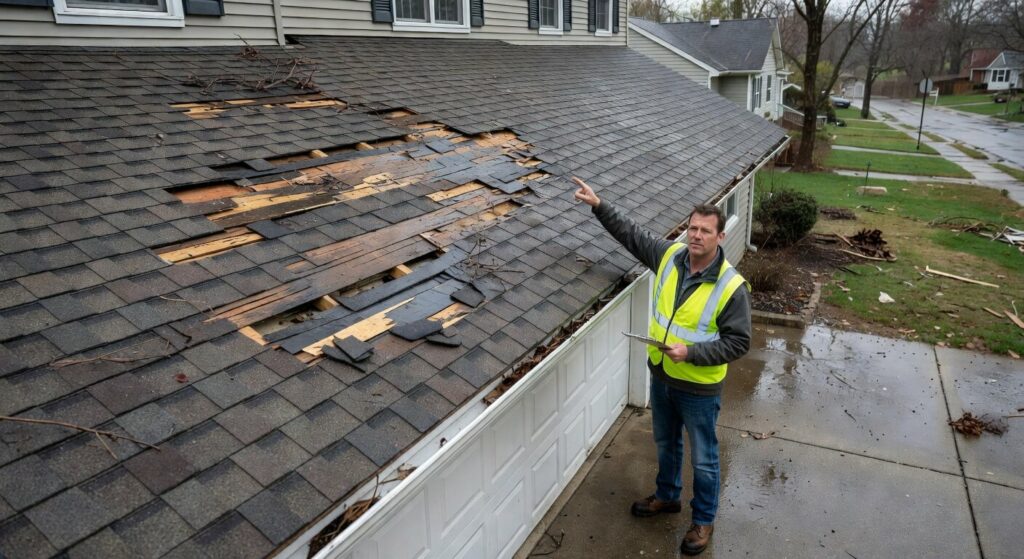
First, check for missing shingles, dents, leaks, and fallen debris from the ground, then take clear photos of anything that looks wrong. If you need a trained eye, schedule a visit through our roofing inspection service so the damage is documented properly.
Next, contact your insurance company and share your notes, photos, and the date of the storm as soon as you can. Acting early gives you a better chance to keep the claim moving and avoid delays that can slow down roof repairs.

Storm Damage Claim Checklist
Use this checklist to stay organized and move your claim forward after a storm. These steps can help you collect the right details, avoid delays, and support your storm damage roof insurance claim tips plan.
- ✅ Look at the roof from the ground and note visible damage
- ✅ Take clear photos of shingles, debris, and leaks
- ✅ Write down the date and time of the storm
- ✅ Call your insurance company as soon as possible
- ✅ Save receipts for emergency repairs or cleanup
- ✅ Keep all claim papers, emails, and phone notes in one place
- ✅ Meet with the adjuster and share your records
- ✅ Have a roofing pro review the damage before repairs begin
Following these steps can make the claim process feel more manageable and keep you from missing important details. A well-documented claim is easier to support and can lead to a smoother path toward repairs.
When you act quickly and stay organized, you give your claim the best chance to move ahead with less stress. That kind of follow-through matters when storm damage affects both the roof and your daily routine.
Additional Advice
Keep your records in one place so you can answer questions fast when the adjuster calls. Clear notes, photos, and repair quotes can make a big difference when you are dealing with storm damage roof insurance claim tips.
Avoid making repairs too soon unless they are needed to stop more damage. If you cover or change the roof before it is documented, it can be harder to show what the storm actually did.
It also helps to get a local roofer involved early, since they know what storm patterns can do in South Hills. You can also learn more about repair options by visiting our roofing team online and seeing how they help homeowners after rough weather.
One common mistake is assuming every roof issue will be obvious right away, but some problems show up later as leaks or loose materials. Staying alert for new signs in the days after the storm can help you protect your home and keep the claim accurate.
Frequently Asked Questions
What should I do first after storm damage to my roof?
First, protect your home and document the damage with clear photos. Then contact your insurance company and a local roofing professional so your claim starts with accurate information.
How soon should I file a roof insurance claim after a storm?
You should file the claim as soon as you can after the storm. Fast action helps keep the details fresh and gives you a better chance to avoid delays.
Do I need a roofer before I call insurance?
No, you do not have to wait for a roofer before calling insurance. Still, having a roofer inspect the roof early can give you helpful proof and make storm damage roof insurance claim tips easier to follow.
What kind of roof damage should I look for after a storm?
Look for missing shingles, dents, lifted edges, leaks, and debris on the roof or in your yard. Even small signs can point to bigger problems that need attention.
Can I make temporary repairs before the adjuster arrives?
Yes, you can make temporary repairs if they are needed to stop more damage. Be sure to take photos first and save your receipts so the insurance company can review them.
Final Thoughts on Filing a Strong Claim
After storm damage, the best move is to stay calm, document everything, and act early. That approach helps you protect your roof, support your claim, and avoid common delays that slow down repairs.
With the right records and the right help, the insurance process becomes much easier to handle. For more updates and homeowner tips, follow Roof-Tastic & Beyond Exteriors on Instagram.