• Spring is the best time to inspect a flat roof for leaks, drainage problems, and surface damage before small issues get worse.
• Cleaning debris, checking seams, and keeping gutters and downspouts clear can help protect the roof from standing water and early wear.
• Knowing the most common DIY mistakes can save time, reduce risk, and show when it is better to call a roofing professional.
Why Spring Care Matters for Flat Roofs
Spring is a smart time to check a flat roof before small issues turn into bigger repairs. After winter, moisture, wind, and shifting temperatures can leave behind damage that is easy to miss at first glance. When that happens, water can start to collect and work its way into the roof system, so acting early matters.
For property owners in Upper Saint Clair, seasonal roof care can make a real difference during months with frequent rain. A flat roof depends on clear drainage and clean surface conditions, which is why our roof inspection services can help catch concerns before they spread. Even a minor crack, clogged drain, or loose seam can lead to a costly mess if it is ignored.
That is why flat roof maintenance tips for spring should be part of every property owner’s seasonal checklist. We know how fast roof wear can go from small to serious when weather keeps changing. By paying attention now, you can help protect the roof, the building below it, and your peace of mind.
What We Check During Spring Roof Care
A flat roof needs more than a quick look from the ground. We check for ponding water, debris buildup, open seams, surface wear, and trouble spots around drains and flashing. These are the kinds of problems that often show up after winter, and they tend to get worse when spring rain keeps coming.
We also pay close attention to gutters and downspouts because clogged drainage can send water back onto the roof. When water has nowhere to go, it can sit in one place too long and strain the roof surface. Flat roof maintenance tips for spring work best when the roof and drainage system are cared for together.
Step-by-Step Spring Flat Roof Care
🔍 Step 1: Inspect the Roof Surface
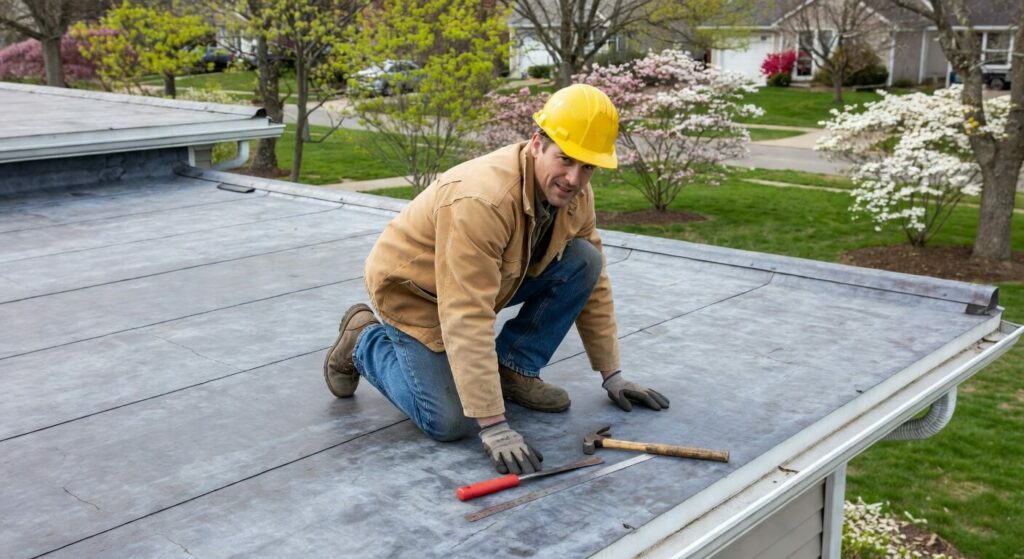
Start by looking for visible damage such as cracks, blistering, loose seams, or worn spots on the roofing material. A careful inspection helps you catch trouble early before water gets in and causes more damage.
🧹 Step 2: Remove Debris
Clear off leaves, branches, dirt, and anything else sitting on the roof. Debris can trap moisture and block water from moving toward the drains, which raises the risk of leaks.
🚿 Step 3: Check for Standing Water
Look for any areas where water pools after rain. Standing water can point to low spots, blocked drains, or drainage problems that need attention right away.
🛠️ Step 4: Inspect Seams and Flashing
Check the seams, edges, and flashing for signs of lifting, gaps, or wear. These areas are common entry points for moisture, so they need to stay sealed and secure.
🪜 Step 5: Clean Gutters and Downspouts
Remove buildup from gutters and downspouts so water can flow away from the roof. If drainage is blocked, water may back up and place extra stress on the roof system.
🧽 Step 6: Wash Away Dirt and Growth
Gently clean off dirt, moss, or algae if they are present. Built-up growth can hold moisture against the roof surface and speed up wear over time.
📋 Step 7: Look at Surrounding Roof Features
Check vents, skylights, and other roof openings for signs of damage or gaps. These areas often shift with weather changes and can create weak points if they are not watched closely.
📞 Step 8: Schedule a Professional Review
Have a roofing professional take a closer look if you notice anything unusual. A trained set of eyes can confirm whether the roof needs simple maintenance or more urgent repair work.
Common DIY Mistakes to Avoid
Spring roof care can seem simple, but it is easy to miss important details. Many DIY mistakes happen because people focus on what they can see and overlook the drainage system or hidden wear. The good news is that these problems are avoidable when you know what to watch for.
The most common issues usually come from rushing through the process or using the wrong approach. A flat roof depends on careful attention, especially after winter weather has already put stress on the surface. Here are the mistakes we see most often during do-it-yourself maintenance.
- ⚠️ Mistake 1: Skipping the Full Inspection Many people only glance at the roof instead of checking seams, flashing, and drains. This happens because the surface may look fine at first, but small issues often hide in plain sight. Prevent it by inspecting every visible section and checking after rain when problem spots are easier to spot.
- ❌ Mistake 2: Leaving Debris on the Roof Leaves, sticks, and dirt often stay behind because they seem harmless. In reality, they can trap moisture and block drainage. Prevent it by clearing the roof regularly and checking corners where buildup tends to collect.
- 🚫 Mistake 3: Ignoring Standing Water Some people assume puddles will dry on their own, so they leave them alone. That can happen when the slope is hard to read or when drainage is already starting to fail. Prevent it by watching for water that remains after weather clears and treating it as a warning sign.
- ⚠️ Mistake 4: Overlooking Drainage Parts Gutters and downspouts are often forgotten because they are not part of the roof surface itself. When they clog, water backs up and can put pressure on the roof edge. Prevent it by cleaning them at the same time you inspect the roof.
- ❌ Mistake 5: Trying to Fix Bigger Problems Without Help Homeowners sometimes attempt repairs on seams, flashing, or damaged areas without the right tools or training. This often happens when they want a fast fix, but it can make the problem worse. Prevent it by calling a roofing professional when damage looks more than minor.
Frequently Asked Questions
How often should a flat roof be checked in spring?
Yes, a flat roof should be checked at least once in spring and again after major storms. Spring weather can bring rain, wind, and temperature swings that reveal damage fast. Regular checks help catch small issues before they turn into leaks.
What are the most important flat roof maintenance tips for spring?
Yes, the most important flat roof maintenance tips for spring are to inspect the surface, clear debris, check drainage, and look for standing water. These steps help protect the roof from moisture buildup and early wear. They also make it easier to spot problems while they are still manageable.
Why does standing water matter on a flat roof?
Yes, standing water matters because it can weaken roofing materials and point to drainage trouble. When water sits too long, it adds pressure to the roof surface and can lead to leaks. It is one of the clearest signs that maintenance is needed.
Can I clean a flat roof myself in spring?
Yes, you can handle light cleaning if the roof is safe to access and the debris is easy to remove. You should avoid climbing onto a roof if conditions are wet, slippery, or unsafe. If you notice damage, it is better to have a professional take a look.
What signs show a flat roof may need professional help?
Yes, signs like open seams, repeated ponding, damaged flashing, or visible leaks usually mean professional help is needed. These issues often go beyond basic maintenance and can spread quickly if ignored. A trained roofing team can identify the cause and recommend the right fix.
Final Thoughts on Spring Roof Care
Spring is the right time to give a flat roof the attention it needs after winter stress and before warmer weather brings more rain. Careful inspection, debris removal, drainage checks, and quick action on warning signs can all help protect the roof system. When you stay ahead of problems, you lower the chance of bigger repairs later.
If you want help with flat roof maintenance tips for spring in Upper Saint Clair, we are ready to help you protect your property with care and experience. Our team knows what to look for and how to handle seasonal roof concerns the right way. For more from our team, follow us on Instagram.