
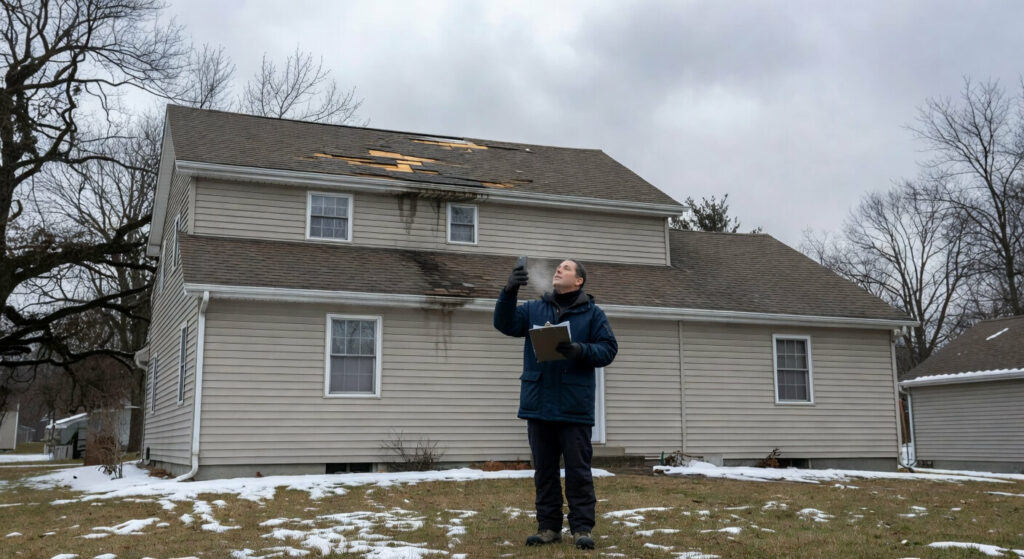
• Learn how to file a roof insurance claim quickly and correctly before small damage turns into a bigger problem.
• Find out what insurance companies usually want, from photos and notes to policy details and repair records.
• Follow a simple step-by-step process that helps protect your home, support your claim, and avoid common mistakes.
Why Fast Roof Claims Matter in Winter
When winter weather hits Presto, roof damage can turn into a bigger problem faster than many homeowners expect. A missing shingle, a leak, or a soft spot can let water move deeper into the home before you even notice it. Acting quickly can help protect your home and make the claim process smoother.
Knowing How to file a roof insurance claim can save time, reduce stress, and help you avoid missed steps. If you wait too long, damage can spread and your insurer may ask more questions about what happened. When that happens, even a small delay can make the process harder than it needs to be.
We help homeowners stay ahead of the problem by treating roof damage as a time-sensitive issue. In cold weather, frozen moisture and repeated thawing can make weak spots worse, so the first signs should never be ignored. If you need a closer look at the condition of your roof, our roof inspection services can help identify damage early.
What Insurance Companies Expect
Insurance companies usually want clear proof that the damage was sudden, not something that built up over time. That means photos, notes, and a fast report matter more than most homeowners realize. We always remind homeowners that the sooner they document the problem, the better their claim file tends to be.
A roof claim is easier to handle when you know what your policy may cover and what your adjuster will likely ask. It helps to keep records of the damage, the weather event, and any steps taken to protect the home after the issue was found. Careful planning now can prevent confusion later and keep the process moving in the right direction.
## How to File a Roof Insurance Claim
📝 Step 1: Check the Damage Safely
Look for visible signs of roof trouble from the ground or from a safe indoor spot. Missing shingles, ceiling stains, damp insulation, and debris around the home can all point to a problem. Safety should come first, so do not climb onto a roof if conditions are icy or unstable.
📸 Step 2: Document Everything You See
Take clear photos and short videos of the damage as soon as possible. Be sure to capture both close-up details and wider shots that show where the damage is located. Good records help support How to file a roof insurance claim and show that the issue was handled right away.
📑 Step 3: Review Your Insurance Policy
Check your policy to see what kind of roof damage may be covered and what the deductible is. Some policies may treat weather damage differently from wear and tear, so the wording matters. Reading the policy before you call can help you speak with more confidence.
📞 Step 4: Contact Your Insurance Company
Report the damage as soon as you can and ask what they need from you next. Have your photos, notes, and policy number ready so the conversation stays clear and organized. Early reporting is an important part of How to file a roof insurance claim because it sets the process in motion.
🧾 Step 5: Write Down the Details of the Event
Note the date, time, weather conditions, and anything unusual you noticed before the damage appeared. If a storm passed through Presto, mention that in your notes because it helps tie the damage to a possible cause. Simple details can make your claim file stronger and easier to understand.
🔧 Step 6: Protect the Home from More Damage
Use temporary steps to help keep water out, such as placing a tarp if it can be done safely. Insurance companies often expect homeowners to take reasonable action to prevent the damage from getting worse. This does not fix the roof, but it can help limit further loss.
👷 Step 7: Schedule a Professional Roof Check
Ask a roofing professional to inspect the roof and give a written assessment of the damage. A trained eye can spot issues that are easy to miss from the ground, including hidden lifting, flashing problems, and soft decking. A professional review can also help support your claim with clear, practical findings.
🗂️ Step 8: Keep All Claim Papers in One Place
Save every email, note, estimate, and repair record connected to the claim. Staying organized makes it easier to answer questions and follow up if your insurer requests more information. Good records also help if the claim takes longer than expected.
Common Mistakes to Avoid
A roof claim can feel simple at first, but small missteps can slow everything down. Many homeowners try to move too fast or rely on memory instead of written records. Careful handling from the start can make the process much easier.
These mistakes often happen when people are stressed, busy, or unsure what their insurance company wants. The good news is that most of them are easy to avoid once you know what to watch for. A steady approach gives your claim a better chance of moving forward smoothly.
⚠️ Mistake 1: Waiting Too Long to Report the Damage
This happens when homeowners hope a small issue will stay small or think they need to wait for a better time. Delays can make the damage worse and may also make it harder to show when the problem started. Report the issue quickly and keep your timeline clear.
❌ Mistake 2: Taking Weak or Incomplete Photos
This mistake usually comes from rushing the process or not knowing what to document. If the photos are blurry, too dark, or too few, the claim may lack strong support. Take wide shots, close-ups, and pictures from several angles so the damage is easy to understand.
🚫 Mistake 3: Ignoring the Policy Details
Many people skip the policy review because insurance language can feel confusing. That can lead to surprises about deductibles, coverage limits, or excluded damage. Read the key parts before filing so you know what to expect.
⚠️ Mistake 4: Doing Unsafe Roof Work Yourself
This often happens when homeowners want to save time or money by checking the roof up close. Wet, icy, or damaged roofing can be dangerous, and a fall can create a bigger problem than the original leak. Stay on the ground when conditions are unsafe and call a professional when needed.
🚫 Mistake 5: Throwing Away Proof Too Early
Some homeowners clean up too fast and discard damaged materials, receipts, or notes. That can make it harder to show the full extent of the problem if the insurer asks questions later. Keep all records and damaged items until the claim is settled.
Frequently Asked Questions
How do I start a roof insurance claim?
Yes, you can start by documenting the damage and contacting your insurance company right away. Gather photos, notes, and your policy information before you call so the process stays organized. If you are wondering How to file a roof insurance claim, this first step matters most because it creates the official claim record.
What roof damage is usually covered by insurance?
Yes, roof damage from sudden events like wind, hail, or falling debris is often covered if your policy includes that type of loss. Damage from normal wear, age, or poor maintenance is usually handled differently. The exact answer depends on your policy wording and the cause of the damage.
Should I get a roof inspection before filing?
Yes, a roof inspection can help you understand the damage before you file and give you better documentation. A professional report can make it easier to explain the problem to your insurer. It is a smart step when you want to file a roof claim with fewer delays.
Can I repair the roof before the adjuster visits?
Yes, you can make temporary repairs if needed to stop more damage, but keep all evidence first. Take photos before covering the area and save any receipts for materials used. Permanent repairs should wait until the claim has been reviewed unless the insurer tells you otherwise.
How long does a roof insurance claim usually take?
Yes, the timeline can vary based on the damage, the insurer, and how quickly documents are submitted. Simple claims may move faster, while larger or disputed claims can take longer. Staying organized and responding quickly can help keep the process moving.
Final Thoughts on Filing a Roof Claim
A roof claim works best when you act fast, document carefully, and keep your records in order. In winter, that matters even more because roof damage can spread quickly and lead to more costly repairs. We help homeowners stay prepared so the next step feels clear instead of overwhelming.
If your roof has taken on storm damage, the safest move is to treat it as an urgent matter and start the claim process right away. A careful approach can protect your home and help you avoid delays that slow down repairs. To stay connected with our team and see more from us, follow us on Instagram.