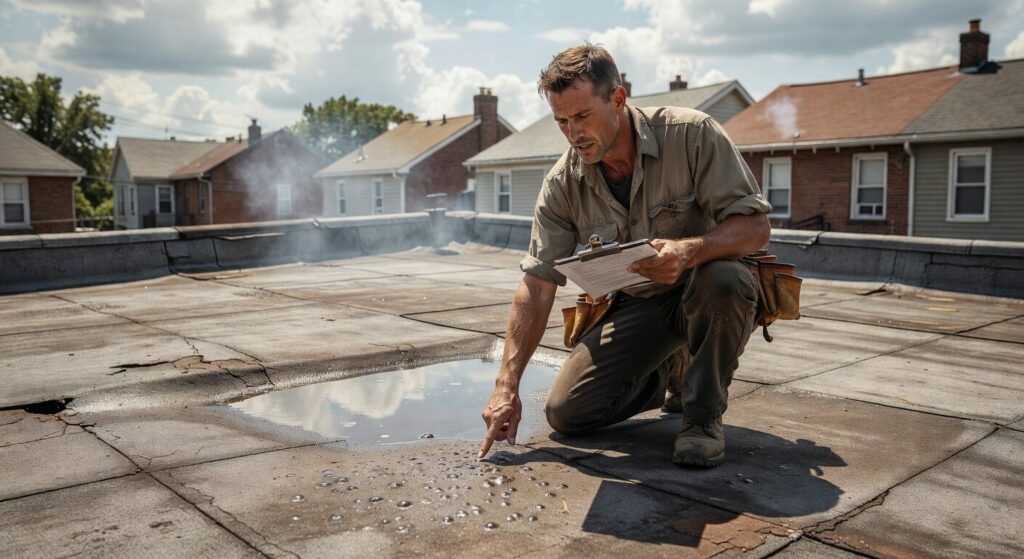
• Summer heat can quickly damage flat roofs by causing cracks, bubbles, soft spots, and weak seams that lead to leaks.
• A careful step-by-step check of the roof surface, drainage, seams, and flashing can help catch problems early.
• Avoid common DIY mistakes like ignoring standing water, missing hidden damage, and waiting too long to get professional help.
Why Summer Heat Matters for Flat Roofs
Summer in Pittsburgh can put real strain on a flat roof. Strong sun, hot surfaces, and sudden weather shifts can wear down the materials faster than many people expect. If small issues are ignored, they can turn into leaks, bubbling, or soft spots that cost much more to fix later.
Flat roofs need a closer look during warm months because heat can make weak areas show up fast. Seams may open, drainage may slow down, and surface cracks can spread if moisture gets trapped. That is why we recommend acting early and keeping a close eye on warning signs before the damage gets worse.
A good first step is to stay ahead of trouble before it starts building up. Our team often reminds property owners that a quick check now can save time and stress later, especially when the roof has already been through a few hot seasons. If you want a deeper look at roof condition, our roof inspection page can help you understand what to watch for.
How Heat Affects Flat Roof Materials
Flat roofing materials expand when temperatures rise and contract as they cool, which can weaken seals over time. In a place like Pittsburgh, that daily change can be hard on membranes, flashing, and joints. When heat and trapped moisture work together, the roof may start to blister, crack, or pull away at the edges.
We also know that drainage plays a big role in roof health during summer. If water sits on the roof for too long, it can add pressure to weak points and make surface damage worse. That is why flat roof repair tips for summer heat should always include drainage checks, surface checks, and a close look at seams near vents, edges, and corners.
Step-by-Step Guide
🔍 Step 1: Check the roof surface
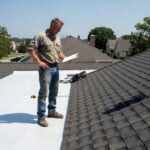
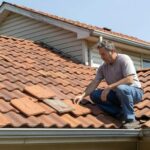
Look for bubbles, cracks, soft spots, or lifted seams across the roof surface. These are common signs that heat has started to break down the material.
🧹 Step 2: Clear off debris
Remove leaves, dirt, and loose items from the roof so water can move away properly. Debris can trap moisture and add extra stress to warm roof materials.
💧 Step 3: Look for standing water
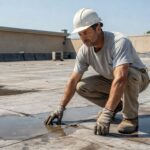
Check the roof after a rain or storm to see if water is pooling in any area. Standing water can speed up wear and signal a drainage problem that needs attention.
🧰 Step 4: Inspect seams and flashing
Pay close attention to seams, flashing, and edges where the roof meets other surfaces. Heat often causes these spots to weaken first, which can lead to leaks if they are left open.
🌡️ Step 5: Watch for heat-related damage
Look for blistering, warping, or areas that feel unusually soft underfoot. These signs often mean the roof is responding to summer heat and may need repair soon.
🛠️ Step 6: Fix small issues early
Seal minor cracks and secure loose areas before they spread. Small problems are much easier to handle when they are caught early, especially in hot weather.
📞 Step 7: Bring in a roofing pro if needed
Call a roofing professional if you see wide damage, repeated leaks, or areas that feel unsafe to inspect. A trained eye can spot hidden problems that are easy to miss from the ground.
Common DIY Mistakes to Avoid
Many people try to handle flat roof problems on their own, but summer heat can make a simple job more risky than it looks. Small mistakes can lead to bigger damage, especially when the roof surface is already stressed by sun and moisture. Knowing what to avoid can help protect both the roof and your time.
⚠️ Mistake 1: Ignoring small cracks
Small cracks may seem harmless, so people often skip them and focus only on bigger issues. That happens because the damage may not look serious at first, but heat can make those cracks spread fast. To prevent this, check the roof carefully and repair minor damage before it opens up more.
⚠️ Mistake 2: Cleaning without checking for damage
Some owners remove debris but never look at the roof closely enough to spot weak spots underneath. This usually happens when the main goal is to make the roof look clean, not to inspect it. Prevent this by slowing down and checking seams, corners, and drainage areas while you clean.
⚠️ Mistake 3: Forgetting about standing water
People often miss pooled water because it may not look urgent right away. That mistake usually happens when the roof appears mostly dry from a distance, even though low spots are holding moisture. Prevent it by checking after rain and making sure water moves off the roof the way it should.
⚠️ Mistake 4: Repairing the wrong area
A leak inside the building does not always point to the exact roof spot that needs work. This happens because water can travel before it shows up below. To avoid this, inspect the full area around the leak instead of fixing only the first spot you notice.
⚠️ Mistake 5: Waiting too long to get help
Some DIY repairs hold for a short time but do not solve the real problem. This often happens when the damage seems manageable and the owner hopes it will not get worse. The safest move is to call a roofing expert when the damage keeps coming back or the roof shows wider wear.
Frequently Asked Questions
What are the first signs of flat roof heat damage?
Yes, the first signs usually include bubbling, cracking, soft spots, and lifted seams. These changes often show up during hot weather when the roof material expands and starts to weaken.
Can I repair a flat roof during summer?
Yes, you can repair a flat roof during summer if the weather is dry and the damage is minor. Flat roof repair tips for summer heat should always start with a careful inspection so you know what can be fixed safely.
Why does standing water matter on a flat roof?
Yes, standing water matters because it adds stress to the roof and can speed up wear. Even a small amount of pooled water can make weak spots worse over time.
How often should a flat roof be checked in hot weather?
Yes, flat roofs should be checked often during hot weather, especially after storms or long stretches of sun. A quick seasonal check can help catch damage before it turns into a leak.
When should I call a roofing professional?
Yes, you should call a roofing professional if you see wide cracking, repeated leaks, or soft areas that may be unsafe. Professional help is the best choice when the problem is bigger than a small patch job.
Keep Your Flat Roof Ready This Summer
Flat roofs need steady attention in summer because heat can make small problems grow faster than expected. When we check for surface damage, clear debris, and watch for drainage issues, we give the roof a better chance to hold up through the season.
The best results come from early action and careful follow-through. If you want to keep up with our work and see more from Roof-Tastic & Beyond Exteriors, follow us on Instagram.