• Learn how to use a spring roof inspection checklist to catch damage early before small issues turn into costly repairs.
• See the key areas to check, including shingles, flashing, gutters, downspouts, attic spaces, soffits, and fascia.
• Avoid common DIY mistakes and get answers to the most common spring roof inspection questions.
Why Spring Roof Checks Matter
Spring weather in Mc Kees Rocks can reveal roof issues that stayed hidden through winter. Ice, wind, and heavy moisture can leave behind loose shingles, worn flashing, and small leaks that grow fast if ignored. A spring roof inspection checklist helps us catch trouble early before it turns into costly damage.
Even a roof that looks fine from the ground can hide weak spots that need attention. That is why we recommend a careful look at the surface, edges, gutters, and attic after the season shifts. If we stay ahead of small problems now, we can help avoid surprise repairs later.
We know roof care is easy to put off when the weather starts to improve. Still, spring is one of the best times to check for damage because mild conditions make issues easier to spot and fix. For homeowners who want help, our roof inspection services can provide a closer look at the parts most people miss.
What We Check Before Summer Hits
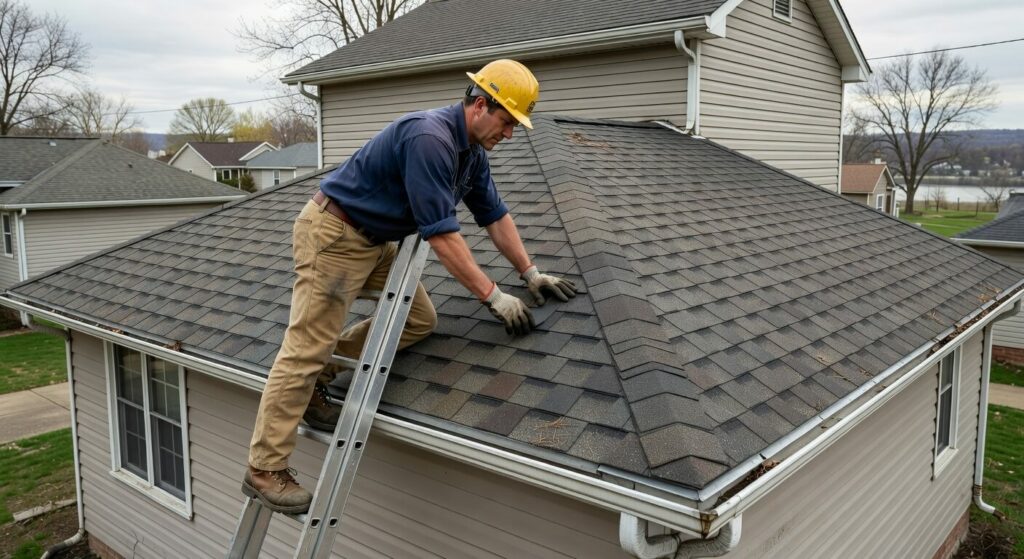
A good spring roof check starts with the shingles, since they often show the first signs of wear. We look for curling edges, cracked pieces, missing tabs, and spots where the roof surface no longer sits flat. We also check flashing around chimneys, vents, and valleys because those seams are common leak points.
Next, we look at drainage and the areas beneath the roofline. Gutters, downspouts, soffits, and attic spaces can all show signs of water problems, and those clues help us find the source faster. When these areas are ignored, water can move into wood, insulation, and ceilings before anyone notices.
Step-by-Step Spring Roof Inspection Checklist
🔍 Step 1: Start with a Ground View
Walk around the home and look for visible roof issues from the ground. This helps us spot missing shingles, sagging lines, and debris buildup without climbing up right away. It is a safe first step that gives us a quick picture of what needs attention.
🧰 Step 2: Check the Shingles
Look closely at the roof surface for cracked, loose, curled, or missing shingles. These signs often point to age, storm wear, or winter damage. Catching them early helps stop water from reaching the roof deck.
🧱 Step 3: Inspect Flashing and Seals
Pay attention to the metal flashing around chimneys, vents, skylights, and roof edges. These areas seal out water, so even a small gap can lead to leaks. We check for rust, lifted edges, and damaged sealant because those are common weak points.
🧹 Step 4: Clear Debris from the Roof
Remove leaves, branches, and other debris that can trap moisture on the roof. Wet debris can break down roofing materials and block proper drainage. A clean roof surface helps the system dry out faster after rain.
🌧️ Step 5: Examine Gutters and Downspouts
Make sure gutters are clear and water can move through them freely. Clogged gutters can push water back under shingles or spill it near the foundation. If needed, our gutters and downspouts services can help keep drainage moving the right way.
🏠 Step 6: Check the Attic for Warning Signs
Look inside the attic for damp wood, dark stains, mold smell, or sunlight coming through the roof boards. These signs often show that water is getting in somewhere above. The attic can tell us more than the roof surface alone.
🪵 Step 7: Look at Soffits and Fascia
Check the boards under the roof edge for peeling paint, rot, or water stains. Damage here can mean moisture is reaching the roofline or gutter system. These parts help protect the structure, so they should not be overlooked.
📋 Step 8: Make a Repair List
Write down every problem you find so nothing gets missed later. This helps us sort small fixes from larger concerns and plan the next move clearly. A simple list makes the inspection more useful and easier to act on.
Common DIY Mistakes to Avoid
A spring roof check can save time and money, but only if it is done carefully. Many homeowners miss key signs because they focus on the most obvious spots and skip the hidden problem areas. These mistakes can turn a small issue into a larger repair.
Some errors happen because the roof looks fine from far away. Others happen because people do not know where water damage usually starts. Here are the most common DIY mistakes we see during a spring roof inspection checklist review.
⚠️ Mistake 1: Only Looking from the Ground
This happens when someone assumes a roof is fine because it looks normal from below. The problem is that many warning signs, like cracked shingles or lifted flashing, are not easy to spot from the yard. To prevent this, use a closer visual check or bring in a trained eye when the roof needs a deeper look.
❌ Mistake 2: Ignoring the Gutters
People often focus on shingles and forget that clogged gutters can cause water to back up onto the roof. This usually happens after storms or after debris builds up through winter. Clear the gutters and downspouts during the inspection so water can drain properly.
🚫 Mistake 3: Missing Small Flashing Damage
Tiny gaps around vents or chimneys are easy to overlook because they do not always look urgent. Even so, those openings can let water in during rain or melting snow. Prevent this by checking each seam carefully and looking for rust, lifting, or cracked sealant.
⚠️ Mistake 4: Skipping the Attic Check
Homeowners sometimes stay outside and never look inside the house for signs of leaks. That happens because attic spaces are easy to forget, especially when the roof seems dry. The best way to avoid this mistake is to check for stains, moisture, and musty smells after you inspect the roof outside.
❌ Mistake 5: Waiting Too Long to Write Things Down
It is common to spot a problem and tell yourself you will remember it later. The issue is that small details are easy to forget once the inspection ends. Keep notes as you go so you can track what needs repair and avoid missing anything important.
Frequently Asked Questions
What should be on a spring roof inspection checklist?
A spring roof inspection checklist should include shingles, flashing, gutters, downspouts, attic spaces, soffits, and fascia. It should also note any signs of water stains, debris buildup, or loose materials. This gives homeowners a clear way to catch roof damage early.
How often should I inspect my roof in spring?
Yes, you should inspect your roof at least once each spring. A seasonal check helps catch winter damage before heavy rain and warmer weather make it worse. In areas like Mc Kees Rocks, spring is a smart time to look for issues caused by cold, wind, and moisture.
Can I do a spring roof inspection myself?
Yes, you can do a basic inspection yourself if you stay safe and check the right areas. A spring roof inspection checklist helps you look for visible damage, but some problems are easier to miss from the ground. If you see signs of leaks or structural concerns, a professional inspection is the safer choice.
What signs show my roof may need repair?
Yes, missing shingles, curled edges, water stains, and clogged gutters are all signs your roof may need repair. You may also notice damp insulation, mold smells, or damaged flashing. These warning signs usually mean water is getting in somewhere.
Why is spring the best time for roof inspection?
Yes, spring is one of the best times for roof inspection because winter damage becomes easier to spot once the weather warms up. Mild temperatures also make it easier to check the roof safely and plan repairs before summer storms arrive. A spring roof inspection checklist helps homeowners stay ahead of bigger problems.
Spring Roof Care Starts Here
A careful spring roof check helps protect the home before small issues turn into major repairs. By following each step and watching for common warning signs, we can keep the roof working the way it should through the rest of the year. This kind of regular attention gives homeowners more control and fewer surprises.
In Mc Kees Rocks, spring weather can reveal damage that winter left behind, so this is the right season to act. If you want to stay updated with more home care tips from our team, feel free to follow us on Instagram.