
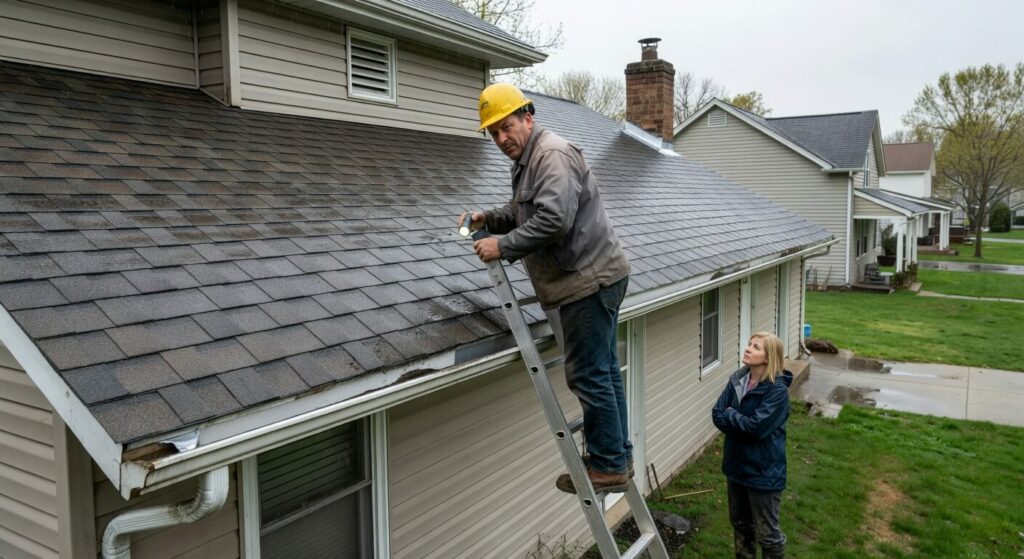
• Learn the early warning signs that can help you spot a roof leak before the damage spreads.
• Follow practical tips for checking the attic, roof edges, flashing, and gutters for common leak sources.
• Get clear answers to common roof leak questions so you can act fast and protect your home.
Why a Small Roof Leak Needs Fast Attention
A roof leak can start small, but it can spread faster than many homeowners expect. By the time you notice a stain on the ceiling, water may already be moving into insulation, wood, and drywall. That is why how to find a roof leak matters before the damage grows worse.
In spring weather, rain can find weak spots that stayed hidden during colder months. In Mars, changing temperatures and wet days can make those weak spots show up when you least expect them. If you want to stay ahead of trouble, a timely look at your roof and a quick check through our roof inspection services can make a real difference.
Even a slow drip can lead to mold, rot, and higher repair costs if it goes unchecked. The longer water sits inside a home, the more places it can reach and the harder it becomes to trace. That is why quick action is so important when you suspect a leak.
How Roof Leaks Usually Show Up
Most leaks do not begin where the water damage appears inside the home. Water often travels along rafters, under shingles, or behind siding before it finally shows up on a ceiling or wall. This is why finding the entry point takes careful attention and a clear process.
We often start by checking the attic, ceiling corners, and areas near vents, chimneys, and roof edges. Damp insulation, dark wood, and peeling paint can all point to a leak that has already started moving through the structure. Gutters and downspouts can also play a role, since clogged drainage can push water back toward the roofline and create problems over time, which is why our gutter and downspout solutions matter too.
Spring rain in Mars can make leak signs easier to spot, but it can also hide the source if the roof stays wet. A careful check after heavy rain often gives the clearest clues because fresh moisture is easier to trace. When you know where to look, it becomes much easier to narrow down the problem and act early.
Tips from the Pros
🔍 Tip 1: Check the attic first
Look for wet insulation, dark wood, or musty odors in the attic after rain. These signs often show up before the leak becomes visible inside the home.
🌧️ Tip 2: Watch after a spring storm
A leak is easier to trace when the roof has recently been exposed to rain. Fresh water marks and damp spots can help point to the problem area faster.
📋 Tip 3: Start near roof joints
Roof valleys, flashing, vents, and chimneys are common places for leaks to begin. These spots handle a lot of water movement and can break down faster than other areas.
🪜 Tip 4: Use safe footing
Only inspect the roof from the ground if it feels unsafe to climb. Wet shingles and steep pitches can be risky, especially after spring rain.
💧 Tip 5: Follow the water path
Water rarely drops straight down from the entry point. Trace the stain back to the highest damp area because that is often closer to where the leak started.
🧱 Tip 6: Inspect flashing carefully
Flashing around chimneys, skylights, and vents can crack or loosen over time. Even a small gap can let water enter during steady rain.
🛠️ Tip 7: Check the gutters and edges
Clogged gutters can send water back under shingles or along the roof edge. Clean drainage helps water move away from the house the way it should.
🔦 Tip 8: Look for daylight in the attic
If you can see sunlight through the roof boards, water can likely get in there too. Small openings may not look serious at first, but they often become leak points during wet weather.
Frequently Asked Questions
How do I find a roof leak fast?
Yes, you can narrow it down quickly by checking the attic, ceiling stains, and areas around roof features like vents and chimneys. When learning how to find a roof leak, start with the highest wet spot and work backward from there.
What are the first signs of a roof leak?
Yes, the first signs often include water stains, peeling paint, damp insulation, or a musty smell. You may also notice discoloration on ceilings or walls after heavy rain.
Can a roof leak come from a different spot than the stain?
Yes, it often does. Water can travel along roof decking or framing before it shows up inside, so the visible stain is not always the entry point.
Is spring a common time for roof leaks?
Yes, spring can be a common time for leaks because rain and temperature changes can expose weak spots. In Mars, wet spring weather can make small roof issues show up more clearly.
When should I call a roofing professional?
Yes, you should call a roofing professional if you cannot find the source, the leak keeps coming back, or the damage is spreading. Fast action can help reduce the chance of deeper water damage and more costly repairs.
Final Thoughts on Spotting Roof Leaks
Finding a leak early can help protect your roof, your walls, and the rest of your home. Small warning signs are often the best clue, especially during spring weather in Mars when rain can reveal hidden trouble. If you stay alert and act quickly, you give yourself a much better chance of avoiding bigger repairs later.
We know how to find a roof leak is not always simple, but careful checking makes the process easier to manage. If you want to keep up with more roofing help and company updates, follow us on Instagram.