• Identifying signs of hail damage: Look for dents and dark spots on shingles, inspect gutters for granule buildup, and assess collateral damage to exteriors.
• Steps for accurate assessment: Document the damage with detailed photos, seek professional roof inspection, and understand reports for insurance claims.
• Common mistakes to avoid: Ensure comprehensive ground-level inspection, don’t overlook gutter damage, and avoid delaying professional assessment for hail damage.
Identifying Potential Hail Damage
Facing the aftermath of a hailstorm, homeowners are often left wondering whether their roof has sustained damage, and what signs they should be looking for. While significant hail impacts can be easily spotted, smaller, more insidious damage might not be so apparent. It’s vital to look for dents or circular patterns in the shingle surface, which are telltale signs of hail. These subtle inconsistencies not only affect the aesthetic of your home but can also compromise the protection your roof offers.
Assessing the Gutter System
The state of your gutters can provide a wealth of information about the condition of your roof. Following a hail storm, one should carefully inspect the gutters and downspouts for signs of accumulation of granules that may have been knocked loose. Excessive granular loss is a strong indication of roof damage, as it points to the erosion of shingle integrity, possibly due to hail impacts. This is an often-overlooked aspect, yet it serves as a silent informant about the possible compromises to your roof’s lifespan.
Exterior Damage as a Clue
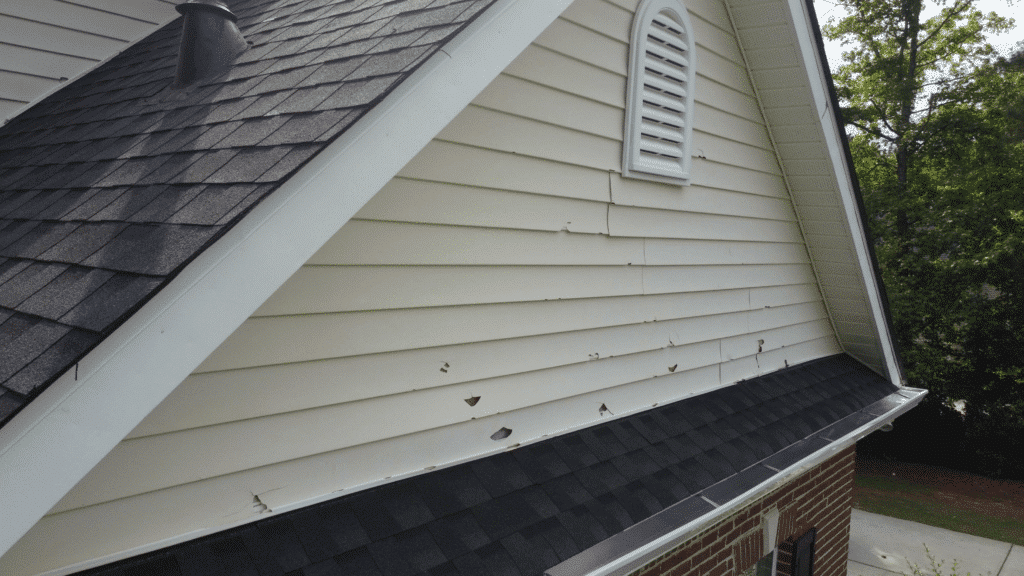
While roof damage is your primary concern, don’t neglect other parts of your home’s exterior. Inspecting siding, window ledges, and air conditioning units for pockmarks or dings can corroborate the likelihood that your roof has borne the brunt of hail. Surveying these areas helps build a comprehensive picture of the hail’s impact, enabling a more informed assessment and accurate reporting for any potential insurance claims.
Documenting the Damage
Documentation is a critical step in managing the aftermath of a hailstorm. It’s essential to capture detailed photos of the damage as these images will serve as indisputable evidence when filing an insurance claim or consulting with roofing specialists. Ensure that each photograph is clear and highlights the contrast in areas where hail has made an impact. This level of detail is not only helpful for insurance purposes but also for roofing experts to quickly assess the repairs needed.
Professional Assessment is Key
After you’ve done your initial check, it’s imperative to have your roof professionally inspected. Licensed professionals bring a trained eye to not only confirm hail damage but to also identify any subtleties overlooked by the untrained eye. A thorough inspection will reveal the full scope of the damage, ensuring that all issues are addressed, thus securing the longevity of your roof. Trusting this crucial step to the experts can make a significant difference in the effectiveness of your roof’s repair and maintenance strategy.
Step 1: Inspect the Roof for Visible Signs of Hail Damage
Begin by visually inspecting your roof from the ground. Look for any obvious signs of damage, such as dents or dark spots on your shingles. If you notice widespread patterns of marks that could indicate hail impacts, it’s a clear sign of potential damage.
Step 2: Check the Gutters and Downspouts
Examine your gutters and downspouts for dings and accumulated granules. Heavy hail can displace the granule surface of asphalt shingles, which often ends up in the gutters, indicating the extent of the hail damage.
Step 3: Look for Damage to Other Exterior Features
Assess other areas of your home’s exterior, such as siding, windowsills, and air conditioning units, for hail damage. This can provide additional evidence that your roof may have been similarly impacted.
Step 4: Document the Damage
Take clear photos of all the hail damage for your records. These will be crucial when assessing the extent of the damage and filing an insurance claim. Make sure the photos are well-lit and defined, capturing the contrast where the impacts have taken place.
Step 5: Get Inside the Attic
Inspect your attic space for signs of water penetration, such as wet insulation, water stains, or light coming through holes. Hail can sometimes create punctures that lead to leaks, compromising your roof’s integrity.
Step 6: Contact a Local Roofing Professional
Reach out to a roofing professional with experience in repairing hail damage. Ensure they are licensed and reputable to perform a thorough roof inspection and provide an accurate assessment.
Step 7: Review the Roof Inspection Report
After the professional inspection, review the detailed report provided by the roofing expert. Use it to understand the full extent of the hail damage and the recommended repair solutions.
Step 8: File an Insurance Claim
With the knowledge of the hail damage and the inspection report, file a claim with your insurance company. Provide all necessary documentation, including photos and the roof inspection report, to accurately and effectively process your claim for repairs or replacement.
Common Pitfalls to Avoid When Assessing Hail Damage
In the eager rush to assess and repair hail damage, property owners often fall into common traps that can not only impede the repair process but also lead to further damage. Missteps in handling post-hailstorm inspections can lead to overlooking subtle yet significant signs of damage, ultimately compromising the integrity of your roof. Being aware of these frequent errors can help you conduct a more effective and efficient evaluation, ensuring your roof recovers fully from nature’s onslaught.
1. Mistake 1: Neglecting a Comprehensive Ground Inspection
– Many individuals make the mistake of a cursory glance at their roof from the ground, missing smaller signs of damage.
– A thorough ground inspection should involve looking for not just large dents but also minor imperfections, as these can escalate into larger issues.
2. Mistake 2: Overlooking Gutter and Downspout Damage
– It’s easy to ignore the gutters and downspouts, yet they often bear the first evidence of hail damage in the form of dents and granule buildup.
– Regularly clearing and inspecting gutters post-storm can help prevent water damage and provide early indicators of roof damage.
3. Mistake 3: Insufficient Documentation of Damage
– A common oversight is insufficient documentation of the hail damage, which is crucial for processing insurance claims.
– Take clear, well-lit photos from multiple angles, ensuring that every impact is recorded for an indisputable claim.
4. Mistake 4: Disregarding Damage to Exterior Features
– Focusing solely on the roof and ignoring damage to siding, window sills, and AC units can result in incomplete repair work.
– Complete the picture of the damage by including these areas in your hail impact assessment.
5. Mistake 5: Delaying Professional Roof Inspection
– Sometimes homeowners delay involving a roofing professional, thinking it’s unnecessary, but this can cause missed or underestimated damage.
– Contacting a licensed roofer promptly ensures a detailed and expert inspection, catching areas you may have missed.
6. Mistake 6: DIY Repairs Beyond Your Skill Level
– While some may attempt to save costs by making repairs themselves, this can lead to poor quality fixes and further damage.
– Trust in professional repairs, especially when it comes to something as vital as your home’s protection.
7. Mistake 7: Mismanaging the Insurance Claims Process
– Inadequate record-keeping and poor communication with your insurer could lead to claim denial or insufficient coverage.
– Ensure all forms of evidence are properly presented and collaborate with your roofer to provide a detailed claim to your insurance.
Ensuring Comprehensive Repair
Navigating the insurance claim process can be tricky; however, it’s **critical for covering the costs** of hail damage repairs. Prompt filing supported by detailed documentation ensures that you get a fair assessment from your insurance company. Collaborating with roofing professionals from the commencement of the claim can ease the process and help justify the need for any necessary repairs or replacements.
Maintain Your Roof’s Integrity
Regular maintenance and timely repairs are the keystones of roof longevity, especially following severe weather events like hailstorms. An undamaged roof is pivotal not just for the structure’s integrity but also for the safety and comfort of those within the residence. Engaging with **Roof-Tastic & Beyond Exteriors** ensures that your roof is always in the best possible condition, safeguarding your home from future weather-related adversities.